The Sovereign Post-Quantum Forced Governance™
For AI.
AI Governance & Audit. Governance that is Forced, not voluntary. Durable, Encrypted Audit Logs. Tamper-Evident by Design. Post-Quantum Encrypted Data Transport. Your Infrastructure. Your Evidence.
Operating below runtime-governance toolkits on infrastructure you control — cloud, data centre, or disconnected — BubbleFish Substrate governs what AI tools can access, what actions they execute, and what leaves your network, and records it as evidence you hold.
Why Application-Layer Controls Leave A Gap
Where application-layer prompt filters and vendor-hosted allow-lists come under strain in autonomous multi-agent workloads.
Permissive Egress & Prompt Wrappers
Modern enterprise AI security relies on application-layer wrapper SDKs and SaaS inspection gateways. Because agent runtimes execute with ambient network egress, a jailbreak, prompt injection, or rogue tool call can bypass policy.
- Ambient Egress: Model binaries and Python interpreters can dial arbitrary endpoints without cryptographic attestation.
- Vendor Trust Dependency: Deletion "guarantees" are unprovable SaaS assertions without mathematical key erasure.
- Mutable Audit Logs: JSON telemetry stored in cloud buckets can be quietly purged, truncated, or subpoenaed by third parties.
- Execution Jailbreaks: Sub-agent spawning escapes runtime interceptors via raw socket connections.
Governance That Does Not Depend On Cooperation
BubbleFish Substrate sits beneath the AI compute stack on infrastructure you control, so AI activity is governed and recorded as it crosses your network rather than reported back to you after the fact.
- Boundary Enforcement: Where the recommended controls are in place, unapproved AI traffic is blocked at the infrastructure boundary before it can leave your network.
- Enterprise-Held Audit Record: Governance decisions and AI activity are written to an audit chain your organisation holds.
- Tamper-Evident Hash Chains: Cryptographically signed, hash-chained audit ledgers, so alteration of the record is detectable.
- Your-Infrastructure Deployment: Runs in your cloud, your data center, or air-gapped networks, with no external SaaS dependencies or telemetry call-homes.
Six Pillars Of Sovereign AI Infrastructure
Engineered for defense enclaves, regulated financial enterprises, and national sovereignty.
Shadow AI First Enforcement
Where the recommended controls are configured, unapproved agent communications are blocked at the infrastructure boundary before they can leave your network. Traffic is continuously inspected for Shadow AI signatures.
Multi-Vector ShadowGuard Fleet Capture
Coverage follows autonomous AI workloads wherever they run inside your estate, including traffic that leaves through the browser.
Deterministic N-AALP & N-PAMP Encapsulation
Envelopement of governed inter-agent operations into canonical CBOR envelopes with COSE Sign1 signatures and post-quantum hybrid wire framing.
Terminus Agentic Firewall & Delegation Control
Cryptographic keys bound what each agent may do and what it may hand to another. Authority an agent was never granted cannot be self-issued, and tool use outside a signed grant is refused.
CognOS: The Human Decision, Carried
A person decides what AI may do in your organisation and configures it in the dashboard. AI traffic tracked by descriptors can be configured with grant, deny, or hold to enforce it.
Cloud, Data Centre, Or Disconnected
No external SaaS dependencies. Deploys across the infrastructure you already run — Azure, AWS, Google Cloud, your own data center, private bare metal, sovereign clouds, or air-gapped networks.
Governed Actions Are Recorded. The Record Is Tamper-Evident.
When a regulator or an audit committee asks which AI tools your people used, what was sent to it, and who approved it, the answer comes from a signed, hash-chained record your organisation holds; not from a vendor report in their cloud.
Can you trust your vendors to audit themselves?
BubbleFish Substrate is Sovereign AI Independent Governance & Audit. Your governance and audit is in your control.
Open Protocols & Dedicated Control Planes
Explore the open-source building blocks and developer interfaces powering sovereign AI.
N-AALP™ Protocol
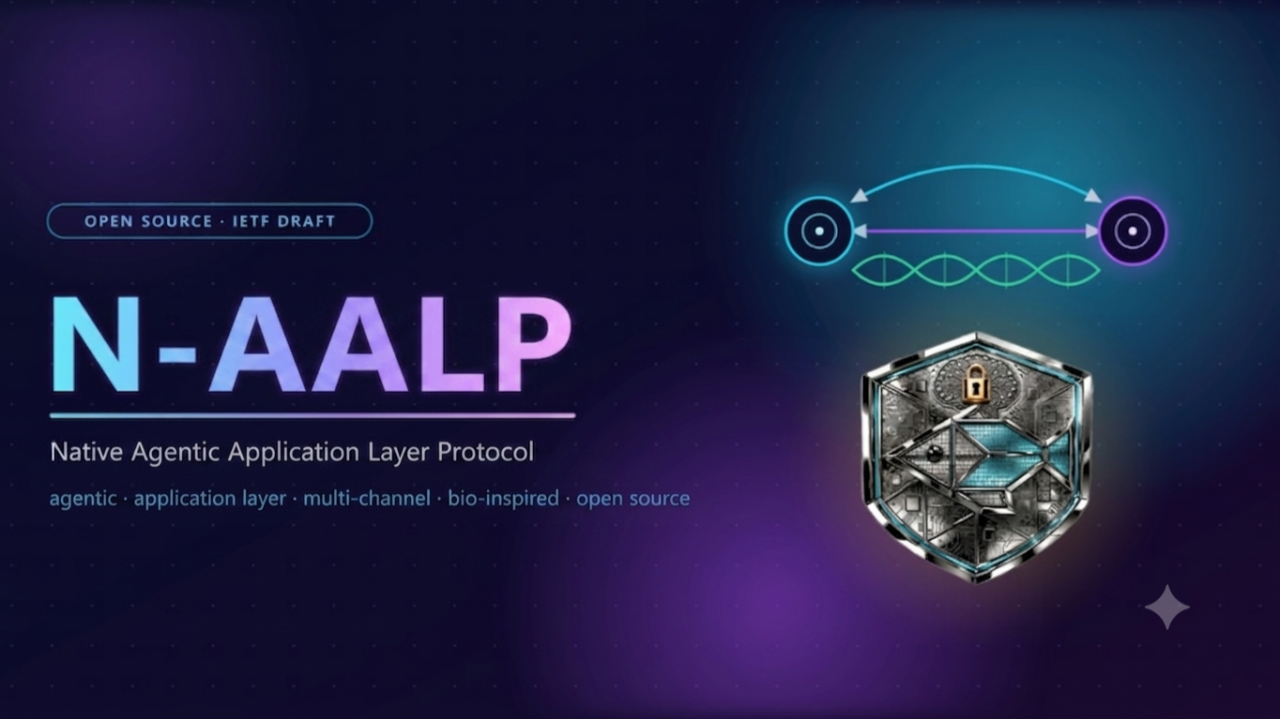
Native Agentic Application Layer Protocol. An open IETF Internet-Draft, written to RFC-style normative precision, specifying deterministic CBOR schemas, CDDL validation, COSE Sign1 signatures, and verifiable agent state transitions.

N-PAMP™ Wire Spec
Native Post-Quantum Agent Messaging Protocol. High-speed wire format featuring a frozen 36-octet header, hybrid ML-KEM key exchange, multiplexed binary channels, and replay defenses.
Nexus Personal
The open-source sovereign AI memory and control plane for individual developer workstations. Single pure Go binary, zero runtime dependencies, local vector memory, and AGPL-3.0 core.